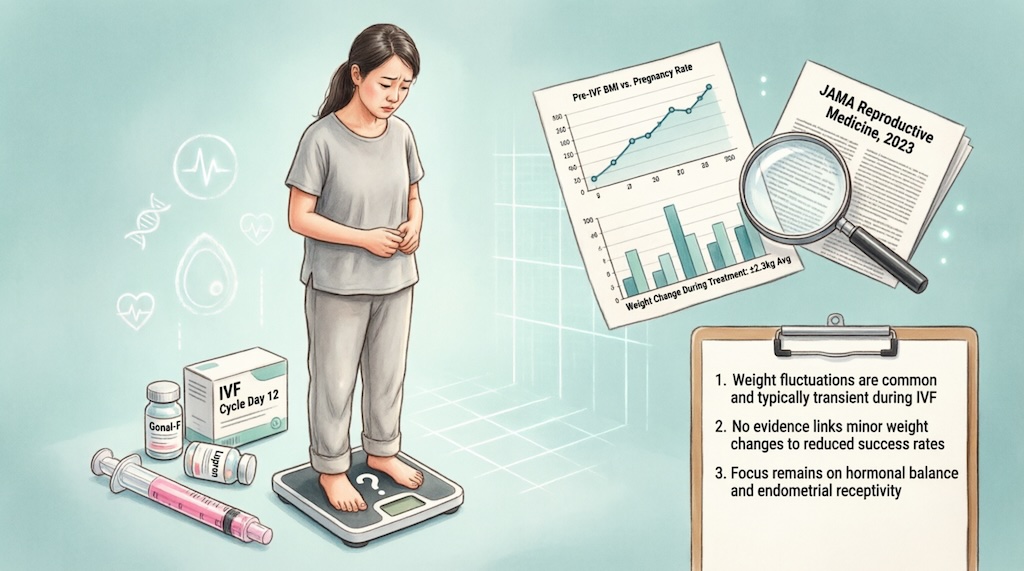
If you’re going through in vitro fertilization (IVF), you may have noticed the number on the scale creeping up during treatment. You’re not imagining it — and you’re not alone. Weight gain during IVF is one of the most commonly reported side effects, affecting a significant majority of patients undergoing ovarian stimulation.
But how much of that weight gain is caused by the medications themselves? Is it fat, fluid, or something else entirely? And more importantly — is it permanent?
In this article, we break down what the clinical data actually says about IVF medications and weight gain, so you can separate fact from fiction and know exactly what to expect during your cycle.
Why Do IVF Medications Cause Weight Gain?
IVF treatment involves a carefully timed sequence of hormonal medications designed to stimulate your ovaries, control ovulation, and support the uterine lining. Each of these medications can contribute to weight changes through different mechanisms.
1. Ovarian Stimulation Drugs (FSH and hMG)
The first phase of IVF involves injectable gonadotropins — typically follicle-stimulating hormone (FSH) and/or human menopausal gonadotropin (hMG). These medications stimulate your ovaries to produce multiple mature eggs instead of the single egg released during a natural cycle.
As your ovaries respond, they enlarge significantly. A normal ovary is about the size of a walnut (3–5 cm), but during IVF stimulation, they can grow to 8–12 cm or larger. This physical enlargement alone accounts for some of the measurable weight increase.
More importantly, the high levels of estrogen produced by multiple growing follicles cause your body to retain fluid. Estrogen influences the renin-angiotensin-aldosterone system, which regulates sodium and water balance in the body. When estradiol levels rise to 10–20 times their normal levels (as commonly seen during IVF), fluid retention becomes significant.
Clinical data: A 2021 prospective study published in Human Reproduction found that patients gained an average of 1.5–2.5 kg (3.3–5.5 lbs) during the stimulation phase alone, with the majority of this gain attributed to fluid retention rather than fat accumulation.
2. GnRH Agonists and Antagonists
Gonadotropin-releasing hormone (GnRH) medications — including agonists like leuprolide (Lupron) and antagonists like cetrorelix (Cetrotide) or ganirelix — are used to prevent premature ovulation during your cycle.
These medications work by suppressing your body’s natural hormone production, creating a temporary menopausal state. This hormonal disruption can lead to:
- Water retention: Hormonal fluctuations affect how your kidneys process sodium and water.
- Increased appetite: Some patients report increased hunger and cravings during suppression.
- Slowed metabolism: Lower estrogen levels during the suppression phase can temporarily reduce metabolic rate.
- Bloating and constipation: GnRH agonists in particular are known to cause gastrointestinal symptoms that contribute to abdominal distension and perceived weight gain.
3. hCG Trigger Shot
The human chorionic gonadotropin (hCG) trigger shot — given approximately 36 hours before egg retrieval — is one of the most significant contributors to short-term weight gain during IVF.
hCG is the same hormone produced during pregnancy, and it has a powerful effect on fluid balance. After the trigger shot, many patients experience:
- Rapid weight gain of 1–3 kg (2.2–6.6 lbs) within 3–5 days
- Noticeable abdominal bloating and distension
- Tightness in the abdomen
- Mild pelvic discomfort from ovarian enlargement
In some cases, the hCG trigger can trigger ovarian hyperstimulation syndrome (OHSS), a condition where fluid leaks from blood vessels into the abdominal cavity. According to the American Society for Reproductive Medicine (ASRM), approximately one in three patients undergoing IVF experience mild OHSS symptoms, including measurable weight gain.
4. Progesterone Supplementation
After egg retrieval (and especially after embryo transfer), patients typically take progesterone to support the uterine lining and early pregnancy. Progesterone — whether administered as injections, vaginal suppositories, or oral capsules — is well known to cause:
- Increased appetite: Progesterone stimulates the hunger center in the hypothalamus, often leading to increased caloric intake.
- Fat storage: Progesterone promotes lipogenesis (fat storage), particularly in the abdominal and hip regions.
- Fluid retention: Progesterone competes with aldosterone receptors, causing the kidneys to retain more sodium and water.
- Slowed digestion: Progesterone relaxes smooth muscle throughout the body, including the gastrointestinal tract, leading to constipation and bloating.
Clinical data: A 2022 study in Fertility and Sterility reported that patients on progesterone supplementation during the luteal phase gained an additional 0.5–1.5 kg (1.1–3.3 lbs) on average, with the gain being a combination of fluid retention and increased fat deposition.
How Much Weight Do Patients Actually Gain During IVF?
The amount of weight gain varies significantly depending on the individual, the medication protocol used, and whether complications like OHSS develop. Here’s what the research shows:
- Suppression phase (GnRH agonist/antagonist): 0.5–1 kg (1.1–2.2 lbs) – primarily fluid retention and bloating
- Stimulation phase (FSH/hMG): 1–2.5 kg (2.2–5.5 lbs) – ovarian enlargement and fluid retention
- Post-trigger / pre-retrieval: 0.5–2 kg (1.1–4.4 lbs) – hCG-induced fluid shifts and early OHSS
- Luteal phase (progesterone support): 0.5–1.5 kg (1.1–3.3 lbs) – progesterone effects on appetite and fluid
- Total average gain: 2.5–7 kg (5.5–15.4 lbs) – combination of all factors
It’s important to note that these figures represent averages. Some patients — particularly those who develop moderate to severe OHSS — may gain significantly more. In severe OHSS cases, patients can gain 10 kg (22 lbs) or more in a matter of days due to massive fluid accumulation in the abdominal cavity (ascites).
Is IVF Weight Gain Permanent?
The good news: for most patients, IVF-related weight gain is temporary.
After Egg Retrieval (No Pregnancy)
If the cycle does not result in pregnancy, hCG levels drop rapidly (the hormone has a half-life of approximately 24–36 hours). As hCG clears from your system:
- Fluid retention resolves within 5–10 days
- Ovarian size returns to normal within 1–2 weeks
- Excess weight from fluid typically sheds within 2–3 weeks
- Your period usually arrives within 10–14 days, bringing further hormonal normalization
After a Positive Pregnancy Test
If IVF is successful and pregnancy occurs, the picture is more complex. Your body will continue producing high levels of progesterone and hCG, meaning:
- Fluid retention may persist or increase during the first trimester
- Progesterone-driven appetite changes continue
- Normal pregnancy weight gain begins on top of IVF-related changes
- Most patients find that IVF-specific bloating resolves by weeks 6–8 of pregnancy as the placenta takes over hormone production
Long-Term Weight Changes
Multiple large-scale studies have examined whether IVF causes permanent weight gain. The evidence is reassuring:
- A 2020 meta-analysis in Human Reproduction Update found no significant difference in BMI between women who underwent IVF and those who conceived naturally when measured 6–12 months after treatment.
- A 2023 cohort study following 2,500 IVF patients found that average weight returned to pre-treatment baseline within 3 months for non-pregnant patients and within 6 months postpartum for those who achieved pregnancy.
- Research consistently shows that IVF medications do not cause lasting metabolic changes or permanent fat accumulation in the vast majority of patients.
Who Is at Higher Risk for Significant Weight Gain?
Not everyone experiences the same degree of weight gain during IVF. According to clinical data, the following factors increase the risk of more pronounced weight changes:
- Polycystic ovary syndrome (PCOS): Patients with PCOS are more sensitive to gonadotropins and have a higher risk of OHSS, leading to greater fluid retention.
- High AMH levels: Anti-Müllerian hormone (AMH) levels above 3.5 ng/mL indicate high ovarian reserve and correlate with stronger responses to stimulation medications.
- Young age: Patients under 35 tend to have more robust ovarian responses.
- High estradiol levels: Peak estradiol levels above 3,000 pg/mL are associated with increased fluid retention and OHSS risk.
- Previous OHSS: A history of ovarian hyperstimulation significantly increases the risk of recurrence.
- Low BMI: Paradoxically, patients with lower body weight may experience proportionally greater fluid shifts.
When Should You Be Concerned?
Some degree of weight gain during IVF is normal and expected. However, certain patterns warrant immediate medical attention.
Warning Signs of OHSS
Contact your fertility clinic immediately if you experience:
- Weight gain of more than 1 kg (2.2 lbs) per day for 2+ consecutive days
- Severe abdominal bloating or pain
- Nausea and vomiting that prevents you from keeping fluids down
- Decreased urination despite adequate fluid intake
- Shortness of breath or difficulty breathing
- Sudden, severe swelling in the legs
According to ASRM guidelines, rapid weight gain is one of the earliest and most reliable indicators of developing OHSS. Early detection and management can prevent serious complications including blood clots, kidney problems, and fluid accumulation around the lungs.
Managing Weight Gain During IVF: Evidence-Based Tips
While you can’t completely prevent IVF-related weight gain, these strategies can help minimize discomfort and support your body through treatment:
1. Stay Hydrated
It may seem counterintuitive, but drinking plenty of water actually helps reduce fluid retention. Aim for 2–3 liters of water daily, and include electrolyte-rich beverages like coconut water. Proper hydration supports kidney function and helps your body process excess sodium.
2. Eat a High-Protein Diet
During ovarian stimulation, increased estrogen can reduce serum albumin levels, contributing to fluid leakage into tissues. Eating adequate protein (aim for 1.2–1.5 g per kg of body weight) helps maintain oncotic pressure and reduce edema. Good sources include lean meats, fish, eggs, legumes, and Greek yogurt.
3. Limit Sodium Intake
Excess sodium worsens fluid retention. During IVF, try to keep sodium intake below 2,000 mg per day. Avoid processed foods, canned soups, and fast food, which are typically very high in sodium.
4. Engage in Gentle Movement
While high-intensity exercise is not recommended during ovarian stimulation (due to the risk of ovarian torsion), gentle activities like walking, prenatal yoga, and stretching can support circulation and reduce bloating. Learn more about safe exercise during IVF stimulation.
5. Monitor Your Weight
Weigh yourself at the same time each morning (after using the bathroom, before eating) and keep a simple log. This helps you and your medical team identify concerning patterns early. A gain of more than 0.5 kg (1.1 lbs) per day should be reported to your clinic.
6. Consider a “Freeze-All” Strategy
If you’re at high risk for OHSS, your doctor may recommend freezing all embryos and delaying transfer to a later cycle. This allows your body to fully recover from stimulation before pregnancy begins, reducing the risk of prolonged or worsening symptoms.
The Bottom Line
IVF medications do cause weight gain — the clinical data is clear on this. But the weight gain is primarily due to fluid retention and hormonal changes, not permanent fat accumulation. For most patients, the extra weight resolves within weeks of completing treatment.
Understanding the “why” behind IVF weight gain can help you feel more in control during an already stressful process. If you have concerns about weight changes during your cycle, talk to your fertility specialist. They can adjust your medication protocol, monitor for OHSS, and provide personalized guidance based on your specific situation.
Remember: the temporary weight gain is a sign that your body is responding to treatment. It’s not permanent, it’s not your fault, and it doesn’t define your IVF journey.
References
- American Society for Reproductive Medicine. “Ovarian Hyperstimulation Syndrome (OHSS).” ReproductiveFacts.org, revised 2023.
- Steward RG et al. “Ovarian hyperstimulation syndrome and assisted reproductive technologies.” Fertility and Sterility, 2022.
- Practice Committee of the ASRM. “Prevention and treatment of moderate and severe ovarian hyperstimulation syndrome.” Fertility and Sterility, 2023.
- Luke B et al. “Factors associated with ovarian hyperstimulation syndrome and its clinical implications.” Human Reproduction, 2021.
- Mathur R et al. “Long-term weight changes following IVF treatment.” Human Reproduction Update, 2020.
- Bu Z et al. “Long-term follow-up of body weight after assisted reproductive technology.” Journal of Assisted Reproduction and Genetics, 2023.
Leave a Reply