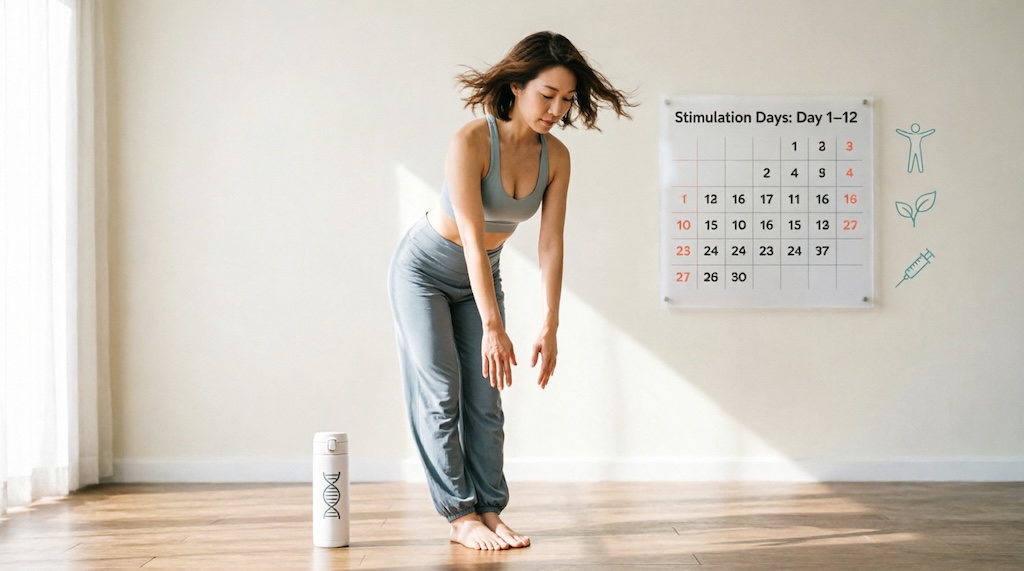
Introduction: Why Exercise During IVF Stimulation Needs Careful Attention
If you’re going through IVF stimulation, you’ve probably wondered: “Can I keep working out, or do I need to stop completely?” It’s one of the most common questions fertility patients ask — and for good reason. You want to stay healthy, maintain your routine, and manage stress. But you also don’t want to jeopardize your chances of success.
The truth is, exercise during IVF stimulation requires a modified approach. While staying active is generally beneficial for fertility, the stimulation phase introduces unique physiological changes that demand caution. In this guide, we’ll walk you through everything you need to know about safe workouts during IVF stimulation — what’s safe, what to avoid, and how to stay active without compromising your cycle.
What Happens During IVF Stimulation?
Before diving into exercise guidelines, it’s important to understand what’s happening inside your body during the ovarian stimulation phase of IVF.
During stimulation, you’ll take hormonal medications (typically follicle-stimulating hormone / FSH and sometimes luteinizing hormone / LH) to encourage your ovaries to produce multiple mature eggs — rather than the single egg released in a natural cycle. This process typically lasts 8–14 days.
Here’s what changes in your body during this phase:
- Your ovaries enlarge significantly — as multiple follicles grow, your ovaries can swell to several times their normal size
- Increased blood flow to the pelvic region — supporting follicle development
- Hormonal fluctuations — elevated estrogen levels can affect your joints, ligaments, and energy levels
- Bloating and abdominal discomfort — a common side effect as the ovaries expand
- Risk of Ovarian Hyperstimulation Syndrome (OHSS) — a potentially serious complication where the ovaries over-respond to medication
These changes mean that high-impact or intense exercise can pose real risks during this delicate window — including ovarian torsion (where the enlarged ovary twists on itself), increased discomfort, and potentially reduced IVF success rates.
Why You Should Avoid Intense Exercise During IVF Stimulation
Most fertility specialists recommend avoiding high-intensity workouts during the stimulation phase, particularly from around Day 5–7 of stimulation onward, when the ovaries are noticeably enlarging. Here’s why:
1. Risk of Ovarian Torsion
This is the most serious concern. When your ovaries are enlarged with multiple growing follicles, vigorous movement, jumping, or sudden directional changes can cause the ovary to twist on its supporting ligaments. Ovarian torsion is a medical emergency that can cut off blood supply to the ovary and may require surgery — potentially canceling your IVF cycle.
2. Increased Discomfort and Bloating
As your ovaries grow, high-impact exercise can worsen abdominal bloating, cramping, and pelvic pressure. Running, jumping, and intense core work can make you feel significantly more uncomfortable.
3. Impact on Blood Flow
Some researchers suggest that redirecting blood flow away from the reproductive organs during intense exercise could potentially affect follicle development. While the evidence isn’t conclusive, most clinics err on the side of caution.
4. Hormonal Stress Response
Very intense exercise triggers a cortisol (stress hormone) response. Since IVF already involves significant hormonal manipulation, adding exercise-induced stress may not be ideal during this sensitive phase.
Safe Workout Guidelines During IVF Stimulation
The good news? You don’t have to be completely sedentary during IVF stimulation. Light to moderate exercise can actually be beneficial — helping with stress management, circulation, and overall well-being. Here are the guidelines most fertility specialists recommend:
✅ Recommended Activities (Low-Impact)
- Walking — A gentle 20–30 minute walk is one of the best exercises during stimulation. It promotes circulation without jarring the body.
- Prenatal yoga (gentle/restorative) — Focus on relaxation, breathing, and gentle stretching. Avoid hot yoga, power yoga, and deep twists.
- Swimming or water walking — The buoyancy of water supports your body and reduces impact on the pelvis. Keep it gentle — no competitive laps.
- Stationary cycling (low resistance) — A light spin on a stationary bike is generally safe. Keep resistance low and avoid standing climbs.
- Light stretching and mobility work — Gentle stretching can relieve tension and improve comfort.
- Breathing exercises and meditation — While not “exercise” in the traditional sense, these practices support both physical and emotional well-being during IVF.
❌ Activities to Avoid During Stimulation
- Running or jogging — The repetitive impact and jarring motion can increase the risk of ovarian torsion
- High-intensity interval training (HIIT) — Too intense; spikes cortisol and involves jarring movements
- Heavy weightlifting — Straining and bearing down increases intra-abdominal pressure
- Jump-based exercises — Jump squats, box jumps, burpees, jump rope — all involve impact that’s risky with enlarged ovaries
- Intense core exercises — Sit-ups, crunches, planks, and leg raises put direct pressure on the abdominal area
- Hot yoga or hot Pilates — Elevated body temperature is not recommended during IVF
- Contact sports — Any activity with risk of abdominal impact should be avoided
- Deep twisting movements — Twisting yoga poses or rotational exercises can stress the ovaries
IVF Stimulation Exercise Timeline: A Day-by-Day Guide
Your exercise tolerance will change as stimulation progresses. Here’s a general timeline:
Days 1–4 of Stimulation (Early Phase)
Your ovaries are just beginning to respond to medication. Light to moderate exercise is generally fine at this stage:
- Walking, light jogging (if you’re already a runner), gentle yoga, swimming
- Listen to your body — if you feel any pelvic discomfort, scale back
- Avoid starting any new intense exercise routine
Days 5–8 of Stimulation (Mid Phase)
Follicles are growing and ovaries are enlarging. This is when you should start scaling back:
- Switch from jogging to walking
- Reduce yoga to restorative/gentle only
- Avoid any exercise that causes bouncing or jarring
- Keep all workouts at a conversational pace (you should be able to talk comfortably)
Days 9–14+ of Stimulation (Late Phase)
Ovaries are at their largest. Stick to very gentle activity only:
- Walking only (flat terrain, moderate pace)
- Gentle stretching and breathing exercises
- Restorative yoga (with modifications)
- Stop all exercise if you feel bloating, pain, or discomfort
After Egg Retrieval
After your egg retrieval procedure, you’ll need additional recovery time:
- Rest completely for 24–48 hours after retrieval
- Light walking can resume after 2–3 days if you feel up to it
- Wait at least 1–2 weeks before returning to moderate exercise
- After embryo transfer, most clinics recommend 2–5 days of reduced activity
- Always follow your specific clinic’s post-retrieval and post-transfer instructions
How to Stay Active Safely: Practical Tips
Here are some practical strategies for maintaining your fitness safely during IVF stimulation:
- Talk to your fertility doctor first — Every patient is different. Your clinic may have specific guidelines based on your protocol, follicle count, and OHSS risk.
- Use the “talk test” — If you can’t hold a conversation during exercise, it’s too intense.
- Monitor your body closely — Any sharp pain, significant bloating, or dizziness means stop immediately and contact your clinic.
- Stay hydrated — Proper hydration is especially important during stimulation and helps reduce OHSS risk.
- Focus on what you CAN do — Rather than fixating on restrictions, embrace gentle movement, stretching, and mindfulness practices.
- Keep a symptom journal — Track how you feel during and after exercise to identify what works for your body.
- Prioritize rest — IVF is physically demanding. Give yourself permission to rest more than usual.
The Emotional Side: Coping with Exercise Restrictions During IVF
For many women, exercise is a crucial stress management tool — and being told to scale back during an already stressful time can feel frustrating and even anxiety-inducing.
Here are some ways to cope:
- Reframe rest as productive — Resting IS helping your IVF cycle. It’s not “doing nothing.”
- Try meditation and visualization — Guided fertility meditations can be incredibly calming
- Connect with others — IVF support groups (online or in-person) understand exactly what you’re going through
- Journaling — Writing about your feelings can be a powerful emotional release
- Gentle nature walks — Being outdoors, even at a slow pace, has proven mental health benefits
- Remember: it’s temporary — The stimulation phase is typically just 8–14 days. You’ll return to your normal routine soon.
When to Call Your Doctor
Contact your fertility clinic immediately if you experience any of the following during or after exercise:
- Sudden, sharp pelvic pain — especially on one side
- Severe bloating or rapid weight gain (more than 1 kg in 24 hours)
- Nausea or vomiting
- Shortness of breath
- Dizziness or fainting
- Heavy vaginal bleeding
- Decreased urine output (a sign of OHSS)
These could be signs of ovarian torsion, OHSS, or other complications that require prompt medical attention.
After Your IVF Cycle: Returning to Full Exercise
Once your IVF cycle is complete and your doctor gives the green light, you can gradually return to your normal exercise routine. Here’s a general approach:
- Week 1 post-retrieval: Light walking only
- Week 2 post-retrieval: Gradually increase walking duration; add gentle stretching
- Week 3–4 post-retrieval: Slowly reintroduce moderate exercise (swimming, cycling, light weights)
- After negative pregnancy test or period: Most women can return to full activity
- If pregnant: Follow your OB/GYN’s exercise guidelines for early pregnancy
Frequently Asked Questions
Can I do yoga during IVF stimulation?
Yes, but stick to gentle, restorative, or prenatal yoga. Avoid hot yoga, power yoga, deep twists, and any poses that put pressure on the abdomen. Always inform your instructor that you’re undergoing IVF.
Is walking safe during IVF stimulation?
Walking is the safest and most recommended exercise during IVF stimulation. Keep it at a comfortable, conversational pace on flat terrain. Avoid long distances or hilly terrain in the later days of stimulation.
Can exercise affect my IVF success rates?
There’s no definitive evidence that moderate, low-impact exercise negatively affects IVF outcomes. However, high-intensity exercise during stimulation may increase the risk of complications like ovarian torsion. Most studies suggest that light activity is neutral to potentially beneficial.
What about weight training during IVF?
Avoid heavy weightlifting during stimulation. If you want to maintain some strength work, use very light weights with high repetitions, and avoid any exercises that involve straining, holding your breath, or bearing down (Valsalva maneuver).
Can I exercise after embryo transfer?
Most clinics recommend 2–5 days of reduced activity after embryo transfer. Light walking is generally fine, but avoid anything more strenuous until your pregnancy test. After a positive test, follow your doctor’s guidelines for exercise during early pregnancy.
Is it OK to do pelvic floor exercises (Kegels) during IVF?
Yes, gentle Kegel exercises are generally safe during IVF stimulation and may even be beneficial. However, avoid aggressive pelvic floor training or using weighted Kegel devices during this time.
Conclusion: Balance Is Key
Navigating exercise during IVF stimulation is all about finding the right balance between staying active and protecting your body during this critical phase. The key takeaways:
- Light, low-impact exercise is generally safe and beneficial during early stimulation
- Scale back as stimulation progresses and your ovaries enlarge
- Avoid high-impact, intense, or jarring activities — especially from mid-stimulation onward
- Listen to your body — pain, bloating, or discomfort are signals to stop
- Always follow your clinic’s specific guidelines — they know your individual situation best
- Remember: this is temporary — a short period of modified activity is a small investment in your fertility journey
Your IVF journey is unique, and what works for one person may not be right for another. When in doubt, consult your fertility team — they’re there to support you every step of the way.
Wishing you all the best on your fertility journey. Stay gentle with yourself — you’re doing amazing.
Disclaimer: This article is for informational purposes. As a webmaster, I curate data; I am not your doctor. Always consult your Reproductive Endocrinologist.
Leave a Reply